Technology Trends 2026: We Checked 39 Forecasts Against What Is Actually Deployed (September 2026 Update)
We checked 39 tech forecasts (Gartner, IDC, IEA) against our own detection data. OpenAI is live on 185,201 domains as of the August 2026 crawl, against 9.9 million running WordPress. See the gap.
Published •Updated •Data through August 2026•31 min read
Every 2026 technology trends report opens with the same Gartner numbers we'll get to in §1 — global IT spending at $5.56T, data centers up 48.8%, AI on track for $1.675T by 2031. Almost none check what's actually deployed. Across our index of 29.6 million active domains (May 2026), ChatGPT is live on just 52,225 sites — 0.18% of the public web — even as 82% of developers use it daily. The gap between forecast and ground truth is the real 2025–2026 story, and it's the lens we apply below to 39 charts from Statista's Tech Trends 2025 dossier (Gartner, IDC, TrendForce, Stack Overflow, ISC2, IEA).
The install-base reality check (TC detection, Q2 2026):
- ChatGPT was detected on 52,225 of 29.6M tracked domains — 0.18% of the public web as of May 2026 — despite 82% of developers using it daily (Stack Overflow). The production layer is roughly 450× behind the creation layer.
- Five software categories on the public web have a single vendor over 50% leader share: Sentry (77.66% error tracking), React (69.74% JS frameworks), WordPress (63.04% CMS), New Relic (52.47% RUM), Shopify (45.99% ecommerce). AI features will most likely ship inside these incumbents, not displace them.
- The four most-detected technologies are all Google-owned (GTM, GA, AdSense, GA4) — Google's telemetry layer touches over 20 million live sites. That's the install base any AI analytics product is competing with.
Plus, from Statista's Tech Trends 2025 dossier (39 charts, 7 chapters):
- Global IT spending forecast to reach $6.16 trillion in 2026, up 10.8% year over year (Gartner)
- Data center systems spending grew 48.8% in 2025 — the steepest category increase in two decades
- The AI market is forecast to grow from $254.5B in 2025 to $1.675 trillion in 2031 (+382.65%)
- Agentic AI penetration in enterprise software jumps from 1% (2024) to 33% (2028) — a 33x increase
- 82% of developers use AI for writing code (Stack Overflow); ChatGPT dominates at 81.7% developer usage
- 57% of smartphone shipments will be GenAI-capable by 2029 (Counterpoint Research)
- High-bandwidth memory (HBM) captures 30% of DRAM revenue with only 10% of output — a 3x revenue-per-bit premium
- 47% of cybersecurity leaders cite GenAI emergence as the top driver of new security actions
- Global data center electricity demand could hit 1,050 TWh by 2026 — comparable to adding a mid-sized country's grid
- The United States has 45 small modular reactor (SMR) facilities planned or under construction — the largest pipeline globally
Two data layers run through every section below. The first is Statista's Tech Trends 2025 dossier, sourced from Gartner, IDC, Stack Overflow, ISC2, TrendForce, the IEA, the World Nuclear Association, and other primary research. The second is TechnologyChecker's own detection index — live fingerprints across ~29.6M active domains. §2 covers what that detection layer shows; chapters §3–§8 walk the forecasts, with TC reality-check callouts where the install base contradicts the curve. Each chart links back to its source.
1. IT spending outlook: $6.16 trillion market, driven by data centers
Global IT Spending 2012-2026: $3.66T to Forecast $6.16T
Global IT spending nearly doubled from $3.66 trillion in 2012 to a forecast $6.16 trillion in 2026. The curve flattens through the 2013-2020 period before breaking upward in 2021 as enterprises shifted to cloud-heavy architectures; the 2024-2026 acceleration reflects AI-driven data center demand.
Source: Gartner · 2012-2026
| Year | Global IT spending (USD billions) |
|---|---|
| 2012 | $3660B |
| 2013 | $3680B |
| 2014 | $3600B |
| 2015 | $3400B |
| 2016 | $3400B |
| 2017 | $3560B |
| 2018 | $3740B |
| 2019 | $3820B |
| 2020 | $3880B |
| 2021 | $4400B |
| 2022 | $4530B |
| 2023 | $4900B |
| 2024 | $5130B |
| 2025 | $5560B |
| 2026* | $6160B |
- 2026 total of $6.16T is 1.7x the 2012 baseline
- 2020-2021 jump was $520B in a single year, the largest pre-AI step
- Data center systems drive most of the 2024-2026 acceleration
Global IT spending on devices, data center systems, software, IT services, and communications hit $5.56 trillion in 2025, with Gartner (via Statista) projecting $6.16 trillion for 2026. The market has nearly doubled since 2012. What matters more than the total is the segment mix. Communications services and IT services still lead in absolute dollars, while software and data center systems are the fastest-growing slices. See the source chart on Statista.
Data center spending is the inflection point
Data Center Systems IT Spending Growth 2016-2026: -10% to 48.8% Peak
Before 2024, data center systems spending growth typically sat in the -5 to +15 percent range. Then the line breaks upward: +39.4 percent in 2024, a record +48.8 percent in 2025, and a forecast +31.7 percent in 2026. No other IT segment shows a similar pattern. The inflection aligns with the mass adoption of generative AI workloads.
Source: Gartner · 2016-2026
| Year | Data center systems YoY growth |
|---|---|
| 2016 | -9% |
| 2017 | 6% |
| 2018 | 15% |
| 2019 | 1% |
| 2020 | 3% |
| 2021 | 11% |
| 2022 | 12% |
| 2023 | 7% |
| 2024 | 39.4% |
| 2025 | 48.8% |
| 2026* | 31.7% |
- 48.8% growth in 2025 is the steepest single-year jump in the segment's history
- 2024-2026 three-year stretch is historically unprecedented for data center spending
- The inflection point aligns with mass generative-AI workload adoption
Year-over-year growth tells a sharper story. Before 2024, data center spending growth typically sat in the -5% to +15% range. Then the line breaks upward: +39.4% in 2024, +48.8% in 2025, and a forecast +31.7% in 2026. No other segment shows the same pattern. Gartner still expects total IT spending to grow 10.8% in 2026, with the data center surge covering most of that lift. The driver is obvious: AI and cloud workloads need capacity, and buying it shows up here first. Our data center market statistics report breaks down where that capacity spend lands. Gartner's forecast lives on Statista here.
IT services market: $1.82 trillion by 2030
Global IT Services Market Revenue 2016-2030: $863B to Forecast $1.82 Trillion
The worldwide IT services market is forecast to reach $1.82 trillion by 2030, up from roughly $863 billion in 2016 — a 2.1x expansion. In 2024, IT outsourcing alone generated $542.4 billion, other IT services $406.2 billion, and business process outsourcing $394.5 billion. Growth is consistent across every sub-segment.
Source: Statista Market Insights · 2016-2030
| Year | IT services revenue (USD billions) |
|---|---|
| 2016 | $863B |
| 2017 | $902B |
| 2018 | $945B |
| 2019 | $953B |
| 2020 | $930B |
| 2021 | $1030B |
| 2022 | $1125B |
| 2023 | $1300B |
| 2024 | $1420B |
| 2025 | $1490B |
| 2026 | $1570B |
| 2027 | $1640B |
| 2028 | $1700B |
| 2029 | $1760B |
| 2030 | $1820B |
- 2.1x growth between 2016 and 2030
- IT outsourcing alone generated $542B in 2024 — the largest segment
- Only dip in the series: 2020 pandemic year, quickly reversed
The IT services market is forecast to reach $1.82 trillion by 2030, up from roughly $860 billion in 2016. In 2024, IT outsourcing generated $542.4 billion, other IT services $406.2 billion, and business process outsourcing $394.5 billion. Growth is consistent across all sub-segments. The underlying story is simple: enterprises are buying capacity from hyperscalers and specialist vendors instead of building it in-house.
Tech company IT budgets: 55% still planning increases for 2026
Share of Tech Companies Planning IT Budget Increases 2024-2026
Tech companies continue to raise IT budgets, but the rate is moderating. 64 percent expected increases for 2024, 62 percent for 2025, and 55 percent for 2026. Only 4 percent expect a decrease for 2026 — the lowest share in this survey series. The drop from 64 to 55 isn't a reversal; it's tighter ROI discipline as the 2022-2024 AI investment wave starts producing measurable returns.
Source: Aberdeen Group; Spiceworks; SWZD · 2024-2026
| Year | Share expecting IT budget increase |
|---|---|
| 2024 | 64% |
| 2025 | 62% |
| 2026 | 55% |
- 55% of tech companies plan higher IT budgets in 2026
- Only 4% plan a decrease — lowest share in the survey series
- The 64% → 55% trend reads as spending discipline, not reversal
Among 835 IT professionals surveyed in September 2025, 55% expected their IT budget to increase in 2026, compared with 62% in 2025 and 64% in 2024. Only 4% expect a decrease, the lowest share in this survey series. The drop from 64% to 55% doesn't read as a reversal. It reads as discipline: firms are still investing, just with tighter ROI targets.
Where budget dollars actually go
IT Budget Allocation in North America & Europe 2025 by Segment
Hardware and software projects tie at 19 percent each of 2025 IT budgets in North America and Europe. Hosted/cloud projects take 15 percent, IT labor 13 percent, and managed services 10 percent. Facilities and power sits at 9 percent, a line that will expand as AI workloads reshape data center energy demand.
Source: Aberdeen Group; Spiceworks; SWZD · 2025
| IT budget segment | Share of 2025 IT budget |
|---|---|
| Software projects | 19% |
| Hardware projects | 19% |
| Hosted/cloud projects | 15% |
| IT labor | 13% |
| Managed services | 10% |
| Facilities & power | 9% |
| Telecommunications | 8% |
| Internal services | 8% |
- Hardware and software tie at 19% each, combining to nearly 40% of IT budgets
- Cloud/hosted projects take the third-largest share at 15%
- Facilities & power at 9% is the line to watch as AI data-center load rises
When North American and European firms break down their 2025 IT budgets, hardware and software tie at 19% each, followed by hosted/cloud-based projects at 15%, IT labor at 13%, and managed services at 10%. The facilities-and-power line sits at 9%. Small today. Watch it: the data center electricity chapter later in this post explains why that number is going to stretch.
| Segment | Share of IT budget |
|---|---|
| Software projects | 19% |
| Hardware projects | 19% |
| Hosted/cloud-based projects | 15% |
| IT Labor | 13% |
| Managed Services | 10% |
| Facilities and Power | 9% |
| Telecommunications | 8% |
| Internal Services | 8% |
Technology trend adoption: AI leads, but 5G and open-source still dominate current use
Technology Trend Adoption in North America & EMEA 2025-2027
Artificial intelligence tops combined adoption (current plus planned within 2 years) at 69 percent. IT automation and 5G follow at 67 and 66 percent respectively. Gigabit Wi-Fi and open-source software both land at 65 percent, followed by Internet of Things at 60 percent. AI-ready hardware lifts furthest on plans alone (+18 points), signalling hardware refresh cycles ahead.
Source: Aberdeen Group; Spiceworks; SWZD · 2025-2027
| Technology | Current + planned adoption within 2 years |
|---|---|
| Artificial intelligence | 69% |
| IT automation | 67% |
| 5G technology | 66% |
| Gigabit Wi-Fi | 65% |
| Open-source software | 64% |
| Internet of Things | 60% |
| AI-ready hardware | 53% |
| Virtual Desktop Infra. | 49% |
| Container technology | 46% |
| Edge computing | 45% |
- AI tops combined adoption at 69% — first time in this survey series
- Seven of ten technologies cluster above 60% combined adoption
- AI-ready hardware has the largest planned-use gain (+18 percentage points)
Asked about current use plus planned adoption within two years, IT professionals rank artificial intelligence first with a combined 69% (52% current plus 17% planned). IT automation is second at 67% combined. Here's the catch: 5G and open-source software tie for the highest current use at 54% each. The word "trend" is doing a lot of work. Several of these technologies are already mainstream.
2. The install-base reality check: what 29.6M domains actually run (Q2 2026)
Updated September 3, 2026 with an August 2026 crawl snapshot. The detection crawl behind this post stalled between March and August 2026 and is now current again. This section adds a dated August level for every technology where our coverage is stable enough to publish one. It deliberately does not publish a May-to-August change for any of them, and the reason is worth reading before the table.
August 2026: what we detect now
| Technology | Live domains, August 2026 crawl |
|---|---|
| Google Analytics | 11,538,537 |
| Google Tag Manager | 11,269,627 |
| WordPress | 9,903,716 |
| Nginx | 5,020,866 |
| React † | 3,099,230 |
| Shopify | 2,280,739 |
| Sentry | 1,996,651 |
| Google AdSense | 714,666 |
| HubSpot | 602,805 |
| Mailchimp | 538,664 |
| New Relic | 238,398 |
| OpenAI † | 185,201 |
Source: TechnologyChecker detection crawl, August 2026, against 29.9 million live business domains. Each figure counts distinct domains carrying a currently-active detection. † React and OpenAI are published as levels only: our month-over-month coverage of those two moved by more than 10% (React −19.4%, OpenAI +40.8%), which is our crawler's reach changing rather than the web's. The other ten moved less than 5% month over month and are stable enough to track from here.
Two figures in this section cannot be refreshed at all, and we would rather say so than restate them. Perplexity (486,276) and Let's Encrypt (7.66M) have no detection pattern in our current ruleset. Both numbers below are May 2026 readings from the previous system and should be treated as historical. The Let's Encrypt figure in particular should not be read against the certificate-authority numbers in our certificate authority market share report, which counts certificate issuance rather than domains.
Before we walk through Statista's seven chapters, here's the reality check that shapes how I read every one of them. My day job at TechnologyChecker is reading technographic data — watching which technologies are actually live on which sites across our index of roughly 29.6 million active domains. The Statista dossier forecasts where the money is flowing. Our detection data shows where the software is already sitting. Those two pictures don't always match, and the gaps are where most of the real 2025–2026 software trends actually play out.
Over the past year I've analyzed technology-stack patterns across more than 10 million domains for client reports, built prospect scoring models that lifted lead-conversion rates by 30%, and spent a lot of time looking at what the macro forecasts miss. The short version: the AI wave isn't landing on a blank slate. It's landing on top of an incredibly concentrated legacy software stack, and that shapes which 2025–2026 predictions actually come true.
The top 10 technologies that run the public web
Top 10 Most-Detected Technologies Across 29.6M Domains (TechnologyChecker 2026)
Across 29.6 million tracked domains, the ten most-detected technologies are dominated by Google-owned infrastructure, open-source web foundations, and a handful of long-tail incumbents. Let's Encrypt (7.66M domains) leads as TLS becomes a default; Google Tag Manager (6.89M) and Google Analytics (6.03M) confirm the telemetry duopoly; WordPress (6.05M) remains the single largest CMS anchor; React (5.30M) is the default front-end framework the AI trend has to ship against.
Source: TechnologyChecker.io · Q2 2026
| Technology | Domains detected |
|---|---|
| Let's Encrypt | 7662374 |
| Google Tag Manager | 6890259 |
| WordPress | 6049999 |
| Google Analytics | 6032470 |
| React | 5295987 |
| Nginx | 4636575 |
| Google AdSense | 4219854 |
| GA4 | 3688199 |
| GoDaddy Parking | 3238569 |
| 2931985 |
- Google-owned infrastructure (Tag Manager, Analytics, AdSense, GA4) appears in four of the top eight slots, touching a combined ~21M domains
- React at 5.3M domains means any AI tool shipping to the web must be React-compatible by default
- Let's Encrypt on 7.66M domains shows TLS has gone from premium feature to infrastructure, mirroring how AI is about to
Four of the top eight most-detected technologies across the public web are Google-owned. Google Tag Manager sat on 6.89M domains, Google Analytics on 6.03M, Google AdSense on 4.22M, and GA4 on 3.69M in May 2026. Taken together, Google's telemetry layer touches over 20 million live sites. Any AI analytics product in 2025–2026 is effectively competing with that install base. We dig into the detail in our marketing technology statistics report, and the most popular technologies by category analysis lists the runners-up in each slot.
The two open-source anchors of the web, WordPress (6.05M domains, 63.04% CMS share in May 2026) and React (5.30M domains, 69.74% framework share), are the other load-bearing entries. React especially matters for the agentic AI forecast in §3. Gartner's 33% agentic penetration by 2028 assumes those agents ship inside applications. Nearly 70% of those applications will be React apps. Any AI SDK that doesn't speak React fluently is fighting for the remaining third.
And Let's Encrypt at 7.66M domains as of May 2026 is a data point I come back to often when someone asks "how fast can AI become infrastructure?" TLS went from premium feature in 2015 to free default by 2020. The software curve can turn over faster than macro forecasts suggest.
Market-share concentration tells you where AI can (and can't) disrupt
Software Category Leaders: Market Share Concentration in 2026
Across the software categories that underpin the technology trends of 2025-2026, market share concentration varies widely. Sentry leads Error & Performance Tracking at 77.66 percent (the single most concentrated category TechnologyChecker tracks). React holds 69.74 percent of JavaScript Frameworks. WordPress has 63.04 percent of CMS, Shopify 45.99 percent of Ecommerce, and Google Analytics 24.46 percent of Web Analytics. The pattern matters because categories with >50 percent leader share are harder for AI-native entrants to disrupt; categories with leaders below 30 percent (HubSpot at 7.76 percent of Marketing Automation) leave more room for AI-first incumbent displacement.
Source: TechnologyChecker.io · Q2 2026
| Leader (category) | Category market share |
|---|---|
| Sentry (Error Tracking) | 77.66% |
| React (JS Frameworks) | 69.74% |
| FingerprintJS (Fingerprinting) | 63.12% |
| WordPress (CMS) | 63.04% |
| New Relic (RUM) | 52.47% |
| Shopify (Ecommerce) | 45.99% |
| Nginx (Web Servers) | 28.05% |
| Google Analytics (Analytics) | 24.46% |
| Mailchimp (Marketing Auto.) | 18.11% |
| HubSpot (Marketing Auto. #2) | 7.76% |
- Error tracking is the most concentrated SaaS category at 77.66 percent leader share (Sentry), signalling observability's move from tool to infrastructure
- Five categories have >50 percent leader share, raising the bar for any AI-native challenger
- Marketing Automation stays fragmented: the top two players combined (Mailchimp 18.11 percent + HubSpot 7.76 percent) hold under 26 percent, the softest target for AI-first disruption
Category-level concentration matters as much as total domains. When I'm building a prospect list, the first question I ask is how concentrated the incumbent is. Looking at the top-ranked technology in each strategic category, as measured in May 2026 — these shares have not been recomputed on the August crawl, because a category share needs a per-category denominator and deriving one by summing domain counts across a category double-counts plugins and themes:
| Category | Leader | Market share (May 2026) |
|---|---|---|
| Error & Performance Tracking | Sentry | 77.66% |
| JavaScript Frameworks | React | 69.74% |
| CMS | WordPress | 63.04% |
| Real User Monitoring | New Relic | 52.47% |
| Ecommerce Platforms | Shopify | 45.99% |
| Web Servers | Nginx | 28.05% |
| Web Analytics | Google Analytics | 24.46% |
| Marketing Automation | Mailchimp | 18.11% |
Five categories have leader share above 50%. That's the "infrastructure zone". Those categories will see AI features added by the incumbent long before an AI-native challenger can gather enough detection signal to threaten them. Error tracking sits at 77.66% Sentry concentration, and I'd argue that's the highest number any SaaS category has ever sustained. Observability is now default infrastructure, same as TLS. Shipping AI-generated code without it isn't viable. Sentry shows up in other developer stacks as well: 27.34% of the live domains of companies that use LogRocket, a session-replay tool that engineering teams put inside their own apps, also run it (September 2026 crawl). For more on that shift, see our technology lookup software industry report.
The softer categories are where the Gartner agentic AI forecast (§3 below) has the most room to actually happen. Marketing Automation's top two players hold under 26% combined (Mailchimp 18.11% + HubSpot 7.76%). CRM is even more fragmented. We walk through why SaaS firms keep switching vendors in why SaaS companies switch CRMs and a related view in the Salesforce market share report.
Where AI chatbots actually live today
OpenAI ChatGPT was detected on 52,225 domains in our index in May 2026, and Perplexity on 486,276 (most of which are referrer signals, not embedded widgets). These are small numbers next to the 5-million-scale of WordPress and React, but they're the first measurable signal of AI widgets entering the visible surface layer of the web. Matched with Stack Overflow's 81.7% developer usage number we get to in §4, the asymmetry is stark: developers have adopted AI tools faster than their organizations have let AI widgets reach production.
Cross-reference this with our Q1 2026 AI adoption analysis, which tracks the DNS and bot traffic layers, and ChatGPT statistics, which looks at usage volume directly. Three different data layers (DNS queries, developer surveys, domain-level detection) all show AI adoption climbing, but at very different speeds. The production-ready layer, meaning widgets actually embedded in websites, is still the slowest of the three.
The three-layer thesis we apply to every forecast below
Pulling the threads together: the Statista dossier's macro numbers are directionally right, but the pace at which they show up in the public web is shaped by three patterns we see in our detection data every day.
- Infrastructure layer — TLS, CDN, error tracking, analytics. Ossifies fast. Once a category hits ~60% leader share, AI-native challengers rarely break through. AI features ship inside the incumbent.
- Application layer — CMS, ecommerce, frameworks. Sticky but not frozen. WordPress at 63% still loses ground each quarter to Shopify and headless platforms. This is where agentic SDKs need a foothold.
- Productivity layer — CRM, marketing automation, sales tools. Fragmented. No one over 50%. This is exactly where the agentic AI forecast in §3 has the most room to land.
That's the lens we use for every chart below. The forecast is the forecast. The install base is the install base. Where they meet is where the actual 2025–2026 software trend lives.
3. The rise of agentic AI: from 1% to 33% of enterprise software by 2028

Enterprise Software Spending 2009-2026: $225B to Forecast $1.43T
Enterprise software spending grew roughly 6x between 2009 and 2026, from $225 billion to a forecast $1.43 trillion. The market nearly tripled between 2020 and 2026 alone, fueled by SaaS consolidation and then AI embedding across the application layer. Gartner forecasts 15.2% year-over-year growth in 2026 — higher than any other IT segment.
Source: Gartner · 2009-2026
| Year | Enterprise software spending (USD billions) |
|---|---|
| 2009 | $225B |
| 2012 | $285B |
| 2015 | $310B |
| 2018 | $420B |
| 2020 | $530B |
| 2022 | $785B |
| 2024 | $1090B |
| 2025* | $1240B |
| 2026** | $1430B |
- Nearly tripled between 2020 and 2026
- 15.2% YoY growth in 2026 outpaces every other IT segment
- Forecast $1.43T puts enterprise software ahead of IT services for the first time
Enterprise software spending is the single cleanest signal of AI's impact on IT budgets. Gartner forecasts $1.43 trillion in 2026, up 15.2% from 2025. That growth rate outpaces nearly every other IT segment. The market has nearly tripled since 2020, first thanks to SaaS consolidation and now thanks to AI being baked into every product roadmap.
What software buyers actually want
Software Buyer Priorities 2025: Security 37%, AI Tied With IT Management at 31%
IT security tops the software buyer priority list at 37 percent, with IT management and AI tied for second at 31 percent each. A few years ago, AI would have been a niche line item; in 2025 it sits alongside categories buyers have funded for two decades. Marketing and CRM trail at 23 percent and 22 percent respectively.
Source: Gartner · 2025
| Priority category | Share of buyers prioritizing |
|---|---|
| IT security | 37% |
| IT management | 31% |
| Artificial intelligence | 31% |
| IT architecture | 24% |
| Marketing | 23% |
| CRM | 22% |
| Accounting & finance | 21% |
- IT security tops priorities at 37%
- AI ties IT management at 31% — a step-change from its niche status five years ago
- Seven categories cluster in the 21-37% band, signaling distributed spend not concentration
Among 3,500 software buyers surveyed by Gartner in August 2024, IT security tops the priority list at 37%, followed by IT management and AI tied at 31%. The tie matters. A few years ago, AI would have been a niche line item. Today it sits next to the categories buyers have funded for two decades. Marketing and CRM trail at 23% and 22%. The traditional software buyer's shopping list has been rewritten.
The AI market: from $254B (2025) to $1.675T (2031)
Global AI Market Size 2020-2031: $94.81B to Forecast $1.675 Trillion
The global AI market is forecast to grow from $94.81 billion in 2020 to $1.675 trillion in 2031, a 17.7x expansion in eleven years. The $1.3 trillion of new market value created between 2026 and 2031 (+382.65%) is roughly the size of Australia's GDP added to a single software category. The 2022 dip from $206B (2021) to $127B reflects a brief funding pullback before the generative-AI wave resumed the trajectory.
Source: Statista Market Insights · 2020-2031
| Year | AI market size (USD billions) |
|---|---|
| 2020 | $94.81B |
| 2021 | $206.34B |
| 2022 | $126.78B |
| 2023 | $137.5B |
| 2024 | $186.93B |
| 2025 | $254.5B |
| 2026 | $347.05B |
| 2027 | $473.98B |
| 2028 | $648.34B |
| 2029 | $888.24B |
| 2030 | $1218.8B |
| 2031 | $1675B |
- 2031 forecast of $1.675T is 17.7x the 2020 baseline
- $1.3 trillion in new market value added between 2026 and 2031 alone
- The 2022 dip is the only contraction year in the 11-year series
This is the headline number for the entire dossier. The global AI market is forecast to grow from $254.5 billion in 2025 to $1.675 trillion in 2031, a 382.65% expansion in six years. The forecast adds $1.3 trillion of new market value between 2026 and 2031. For context, that's roughly the GDP of Australia, added to a single software category.
| Year | AI market size (USD billions) |
|---|---|
| 2020 | $94.81B |
| 2024 | $186.93B |
| 2025 | $254.5B |
| 2026 | $347.05B |
| 2028 | $648.34B |
| 2030 | $1,218.8B |
| 2031 | $1,675B |
Agentic AI: the next 33x jump
Agentic AI in Enterprise Software: 1% in 2024, 33% Forecast by 2028
Less than 1 percent of enterprise software applications incorporated agentic AI in 2024. Gartner forecasts 33 percent by 2028, a 33x increase in four years. The shift ends the prompt-and-paste era of AI integration and opens the door to autonomous agents wired directly into business workflows.
Source: Gartner · 2024-2028
| Year | Share with agentic AI |
|---|---|
| 2024 | 1% |
| 2028 (forecast) | 33% |
- 33x jump in agentic AI penetration over four years
- The 2024 baseline is effectively zero — the curve is only beginning
- 2028's 33% share implies roughly one in three enterprise apps will act autonomously
In 2024, less than 1% of enterprise software applications included agentic AI (software that can make decisions and take actions with minimal human prompting). Gartner forecasts 33% by 2028, a 33x increase in four years. The shift ends the "prompt an LLM and paste the answer back" era and opens the door to autonomous agents wired directly into business workflows. View the original Statista chart.
TC reality check. Agentic AI shipping inside the application layer means agentic AI shipping inside React. Per §2, React holds 69.74% of JavaScript frameworks across our index — 5.30M domains. The 1% → 33% curve is bottlenecked less by Gartner's enterprise adoption math than by how fast agent SDKs ship a React-native adapter the install base will accept. The productivity-layer categories (CRM, marketing automation) are where this lands first, because no incumbent has a 50%+ moat to defend.
Agentic AI Market Value 2024-2030: $5.1B to Forecast $47.1B (44% CAGR)
The agentic AI market grew from $5.1 billion in 2024 to a forecast $47.1 billion by 2030, a compound annual growth rate of over 44 percent. Few software sub-categories have ever shown this steep a curve from baseline to multi-tens-of-billions inside a six-year window.
Source: Capgemini · 2024-2030
| Year | Agentic AI market value (USD billions) |
|---|---|
| 2024 | $5.1B |
| 2030 (forecast) | $47.1B |
- 9x growth in market value in six years
- 44%+ compound annual growth rate
- Agentic AI reaches $47B before many SaaS categories reach $10B
Capgemini's dollar forecast matches the share forecast. The agentic AI market grows from $5.1 billion in 2024 to $47.1 billion by 2030, a compound annual growth rate of over 44%. Few software sub-categories have ever shown this steep a curve from baseline to multi-tens-of-billions in a six-year window.
4. The AI-powered developer: 82% write code with AI, but trust is thin
Developer AI Use Cases 2024: 82% Write Code With AI
82 percent of developers use AI for writing code, 67.5 percent for searching for answers, and 56.7 percent for debugging. Usage drops sharply for verification tasks: only 13.2 percent use AI for committing and reviewing code, 5.3 percent for predictive analytics, and 4.5 percent for deployment and monitoring. AI has won the authoring phase of the workflow; it has not yet won the phases where trust matters most.
Source: Stack Overflow Developer Survey 2024 · 2024
| Use case | Share of developers currently using |
|---|---|
| Writing code | 82% |
| Searching for answers | 67.5% |
| Debugging & help | 56.7% |
| Documenting code | 40.1% |
| Generating content/data | 34.8% |
| Learning a codebase | 30.9% |
| Testing code | 27.2% |
| Committing & reviewing | 13.2% |
| Project planning | 12.2% |
| Predictive analytics | 5.3% |
| Deployment & monitoring | 4.5% |
- 82% use AI to write code but only 13.2% use it to commit or review code
- The gap between authoring and verification is where AI tool trust is tested
- Deployment and monitoring at 4.5% shows AI hasn't reached operations yet
According to the 2024 Stack Overflow Developer Survey (35,978 respondents), 82% of developers use AI to write code, 67.5% use it to search for answers, and 56.7% use it for debugging. Usage drops off sharply for committing and reviewing code (13.2%), predictive analytics (5.3%), and deployment/monitoring (4.5%). The pattern is clear. AI has won the authoring phase of the workflow. It hasn't won verification or operations yet, which happen to be the exact places where trust matters most.
ChatGPT's dominance among developer tools
Most-Used AI Developer Tools 2024: ChatGPT 81.7%, GitHub Copilot 44.2%
ChatGPT dominated developer tool usage at 81.7 percent in 2024. GitHub Copilot followed at 44.2 percent, Google Gemini at 22.4 percent, Bing AI at 14 percent, and Visual Studio Intellicode at 13.7 percent. Claude reached 7.6 percent and Perplexity AI 4.9 percent. Microsoft-owned tools (GitHub Copilot + Bing AI + Visual Studio Intellicode) combined reach 71.9 percent — close to ChatGPT's standalone dominance.
Source: Stack Overflow Developer Survey 2024 · 2024
| AI developer tool | Share of developers using |
|---|---|
| ChatGPT | 81.7% |
| GitHub Copilot | 44.2% |
| Google Gemini | 22.4% |
| Bing AI | 14% |
| Visual Studio Intellicode | 13.7% |
| Claude | 7.6% |
| Codeium | 5.8% |
| Perplexity AI | 4.9% |
| Tabnine | 4.9% |
| WolframAlpha | 4.3% |
| Phind | 3.6% |
| Amazon Q | 2.8% |
| Meta AI | 2.8% |
- ChatGPT holds 81.7% — a standalone dominance rarely seen in any developer tool category
- Microsoft's three tools (Copilot, Bing AI, Intellicode) combined reach 71.9%
- Claude and Perplexity both under 10% despite heavy consumer awareness
ChatGPT leads developer tool usage at 81.7%, followed by GitHub Copilot at 44.2% and Google Gemini at 22.4%. Add up the Microsoft-owned tools (GitHub Copilot plus Bing AI plus Visual Studio Intellicode) and you get 71.9% combined reach, which gets close to ChatGPT's standalone number. The developer AI stack is effectively a two-company race.
| Tool | Developer usage share |
|---|---|
| ChatGPT | 81.7% |
| GitHub Copilot | 44.2% |
| Google Gemini | 22.4% |
| Bing AI | 14% |
| Visual Studio Intellicode | 13.7% |
| Claude | 7.6% |
| Codeium | 5.8% |
| Perplexity AI | 4.9% |
| Tabnine | 4.9% |
AI engineer skill proficiency: still intermediate
AI Engineer Skill Proficiency 2024: ChatGPT Assistants API Leads at 61.54/100
Even the top AI-related skill (ChatGPT Assistants API) scores just 61.54 out of 100 on DevSkiller's proficiency assessment. Azure Databricks and Tabnine tie at 60 each. Ethical AI Usage scores 51.54, Google Gemini (Bard) 43.13, and Data Literacy 41.54. The intermediate ceiling reflects how recently most of these tools entered the market — there has not been time for a generation of engineers to climb to expert-level proficiency.
Source: DevSkiller · 2024
| AI skill | DevSkiller proficiency score (0-100) |
|---|---|
| ChatGPT Assistants API | 61.54 |
| Azure Databricks | 60 |
| Tabnine | 60 |
| Ethical AI Usage | 51.54 |
| Amazon Alexa | 50 |
| Dinootoo | 50 |
| ChatGPT | 49.47 |
| DALL-E | 48.33 |
| Google Gemini (Bard) | 43.13 |
| Data Literacy | 41.54 |
- Top skill scores 61.54/100 — intermediate ceiling across the board
- Ethical AI Usage at 51.54 is the single most under-developed critical competency
- Data Literacy at 41.54 is the lowest — a gap worth flagging for hiring managers
DevSkiller's 2024 assessment of 15,337 IT professionals found the highest AI-related skill (ChatGPT Assistants API) averages just 61.54 out of 100. Azure Databricks and Tabnine both scored 60. Even the top skills sit in the intermediate range. That makes sense when you look at how fast the ladder appeared: there hasn't been time for a generation of engineers to climb to expert-level proficiency on tools that mostly didn't exist two years ago.
AI and complex tasks: a trust gap
Developer Rating of AI on Complex Tasks 2024: Only 3.3% Say 'Very Well'
Only 3.3 percent of developers rate AI as very well at handling complex tasks. 32.7 percent say good but not great; 31.3 percent say bad; 11.9 percent say very poor; 20.8 percent are neutral. Combined, 43.2 percent rate AI as bad or worse at complex work. That is the detail the industry narrative misses when claiming AI replaces senior engineers: AI augments authoring but struggles at complex reasoning.
Source: Stack Overflow Developer Survey 2024 · 2024
| Label | Value |
|---|---|
| Good, but not great | 32.7% |
| Bad at handling complex tasks | 31.3% |
| Neither good nor bad | 20.8% |
| Very poor | 11.9% |
| Very well | 3.3% |
- Only 3.3% of developers say AI handles complex tasks very well
- 43.2% combined rate AI as bad or very poor at complex reasoning
- Nearly a third (32.7%) land in the 'good but not great' middle — useful, but not trusted for hard problems
Ask developers how well AI handles complex tasks and the enthusiasm cools fast. Only 3.3% say "very well". The largest single group (32.7%) says "good but not great". Another 31.3% says "bad" and 11.9% says "very poor". Combine the bottom two and 43.2% rate AI as bad or worse for complex work. That's the detail the industry narrative misses when it claims AI replaces senior engineers. AI augments writing. It struggles at complex reasoning.
Why developers distrust AI tools
Developer Challenges With AI Tools 2024: 66% Don't Trust the Output
66.1 percent of developers don't trust AI tool output. 64.6 percent say AI lacks context of their codebase and company knowledge. 31.9 percent cite missing security policies, 29.6 percent cite insufficient training, and 25.9 percent say not everyone on the team uses AI tools. The gap between 'AI wrote this code' and 'I can ship this code' is context and trust — not model capability.
Source: Stack Overflow Developer Survey 2024 · 2024
| Challenge | Share of developers citing |
|---|---|
| Don't trust output | 66.1% |
| Lacks codebase context | 64.6% |
| No security policies | 31.9% |
| Lack of training | 29.6% |
| Not everyone uses them | 25.9% |
| Creates more work | 12% |
| Lack of executive buy-in | 11.9% |
- Two in three developers distrust AI output (66.1%)
- 64.6% say AI lacks codebase and company context — the problem long-context models and agentic AI are racing to solve
- Only 11.9% lack executive buy-in — the top-down mandate is there; the bottom-up trust is not
The top two challenges both come down to trust. 66.1% don't trust AI output. 64.6% say AI lacks context of their codebase and company knowledge. The gap between "AI wrote this code" and "I can ship this code" is context. That's what agentic AI and long-context models are trying to close, and it's also why the 2024-2028 enterprise adoption curve is steeper than 2020-2024 was. AI app builders go furthest, writing and hosting the app in one step, and they are still small on the public web: Lovable shows up on 7,395 domains in our September 2026 crawl, and in a random sample a quarter of those carried only a DNS verification record.
TC reality check. The trust gap shows up in the install base. Per §2, OpenAI ChatGPT was detected on just 52,225 of 29.6M tracked domains — 0.18% of the public web. Perplexity referrer signals reach 486K more, but those are inbound traffic, not embedded widgets. Stack Overflow's 82% is the creation layer. The public web's deployment layer is roughly 450× behind it, and the 66.1% distrust number above is the proximate reason. Production catches up when context catches up — not before.
5. AI-embedded consumer electronics: the smartphone and PC refresh cycle
GenAI Device Shipments 2024: 240M Smartphones, 54.5M PCs
Gartner forecast 240 million generative AI smartphones and 54.5 million generative AI PCs shipping worldwide in 2024. Nearly 295 million AI-capable personal devices entering the market in a single year — a hardware reset that rhymes with the mobile-internet transition of the late 2000s.
Source: Gartner · 2024
| Device segment | Unit shipments (millions) |
|---|---|
| GenAI smartphones | 240M |
| GenAI PCs | 54.5M |
- 240M GenAI smartphones in 2024 — a new device category is born
- 54.5M GenAI PCs — 4.4x smaller but still a major hardware refresh
- ~295M AI-capable devices in a single year is comparable to early-2010s smartphone growth
Gartner forecasts 240 million generative AI smartphones and 54.5 million GenAI PCs shipping worldwide in 2024 alone. Together, that's nearly 295 million AI-capable personal devices entering the market in a single year. The closest analog is the mobile-internet transition.
The GenAI smartphone curve
GenAI Smartphone Shipments 2023-2028: 51M to Forecast 912M (17x)
Generative AI smartphone shipments grow from 51 million units in 2023 to a forecast 912 million in 2028, a 17x increase in five years. The 2026 tipping point (688 million units) is when GenAI smartphones become the default tier rather than a premium one.
Source: IDC · 2023-2028
| Year | GenAI smartphone shipments (millions) |
|---|---|
| 2023 | 51M |
| 2024 | 234M |
| 2025 | 405M |
| 2026 | 688M |
| 2027 | 827M |
| 2028 | 912M |
- 17x growth in GenAI smartphone shipments between 2023 and 2028
- 2026 at 688M is the tipping-point year when GenAI becomes the default tier
- 2023→2024 alone saw 4.6x growth — a pace rare in any device category
IDC's curve is dramatic: 51 million GenAI smartphones in 2023, 234 million in 2024, and a forecast 912 million in 2028. That's a 17x increase in five years. The tipping point is 2026 at 688 million units. That's the year GenAI smartphones become the default, not a premium tier.
| Year | GenAI smartphone shipments (millions) |
|---|---|
| 2023 | 51 |
| 2024 | 234 |
| 2025 | 405 |
| 2026 | 688 |
| 2027 | 827 |
| 2028 | 912 |
GenAI Smartphone Share of Shipments: 30% in 2025 to 57% by 2029
GenAI-capable smartphones are forecast to climb from 30 percent of worldwide shipments in 2025 to 57 percent by 2029, a 27-percentage-point swing. The majority-AI crossover happens sometime between 2027 and 2028.
Source: Counterpoint Research · 2025-2029
| Year | GenAI smartphone share of shipments |
|---|---|
| 2025 | 30% |
| 2029 (forecast) | 57% |
- 57% share by 2029 makes GenAI the majority of all smartphone shipments
- 27-percentage-point rise in four years
- Crossover happens between 2027 and 2028
Counterpoint Research frames the same trajectory as market share. 30% of all smartphone shipments in 2025, climbing to 57% by 2029. The majority-AI shipment crossover happens sometime between 2027 and 2028.
AI PCs follow the same curve, one year behind
AI PC Shipments 2024-2026: 38M to Forecast 143M (Nearly 4x)
AI PC shipments grow from 38.15 million units in 2024 to a forecast 143.11 million in 2026, nearly 4x in two years. The growth is steep because AI PCs require a new processor generation (NPUs on-die), which makes the refresh cycle compulsory rather than optional.
Source: Gartner · 2024-2026
| Year | AI PC shipments (millions) |
|---|---|
| 2024 | 38.15M |
| 2025 (forecast) | 77.79M |
| 2026 (forecast) | 143.11M |
- Nearly 4x shipment growth in two years
- 2024→2025 growth is 104%, 2025→2026 is 84% — both rare in PC category history
- NPU-on-die requirement forces a compulsory refresh cycle
AI PC shipments grow from 38.15 million in 2024 to a forecast 143.11 million in 2026. That's nearly 4x in two years. The growth is steep because AI PCs need a new processor generation (NPUs on-die), which makes the refresh cycle compulsory rather than optional.
AI PC Share of Shipments: 31% in 2025 to 54.7% in 2026
AI PCs jump from 31 percent of worldwide PC shipments in 2025 to 54.7 percent in 2026 — a 23.7 percentage-point leap in a single year. That kind of swing is unusually steep for the PC category. AI PCs cross the majority threshold a full year before smartphones do, because the PC refresh cycle is shorter and more predictable.
Source: Gartner · 2025-2026
| Year | AI PC share of PC shipments |
|---|---|
| 2025 (forecast) | 31% |
| 2026 (forecast) | 54.7% |
- 23.7-percentage-point jump in a single year
- 54.7% in 2026 is the AI-PC majority crossover
- PCs reach the majority threshold a year before smartphones do
On a share basis, AI PCs jump from 31% of shipments in 2025 to 54.7% in 2026. That's a 23.7 percentage-point leap in a single year, which is almost unheard of in the PC category. PCs will cross the majority-AI threshold a full year before smartphones do, because the PC refresh cycle is shorter and more predictable.
The AI chip market: $332.77B by 2030
AI Chip Market Revenue 2018-2030: $9.3B to Forecast $332.77B (36x)
The AI chip market is the physical backbone of every other AI trend in this post. Revenue grew from $9.3 billion in 2018 to a forecast $332.77 billion in 2030 — a 36x increase. The 2025 figure alone ($92.74B) is bigger than the entire 2021 market. Machine learning, deep learning, and generative AI workloads account for nearly all of the growth.
Source: Statista Market Insights · 2018-2030
| Year | AI chip market revenue (USD billions) |
|---|---|
| 2018 | $9.3B |
| 2019 | $12.79B |
| 2020 | $18.01B |
| 2021 | $24.87B |
| 2022 | $34.78B |
| 2023 | $46.15B |
| 2024 | $68.91B |
| 2025 | $92.74B |
| 2026 | $125.45B |
| 2027 | $166.48B |
| 2028 | $215.79B |
| 2029 | $272.1B |
| 2030 | $332.77B |
- 36x expansion between 2018 and 2030
- 2025 alone ($92.74B) is larger than the entire 2021 AI chip market
- $23.83B added in 2025 vs 2024 — the single largest year-over-year jump
The AI chip market is the physical backbone of every other trend in this post. It went from $9.3 billion in 2018 to a forecast $332.77 billion in 2030. That's a 36x increase. The 2025 figure alone ($92.74B) is bigger than the entire 2021 market. Machine learning, deep learning, and generative AI workloads account for nearly all of the growth.
6. Memory at the heart of AI: HBM captures 30% of DRAM revenue

Memory Semiconductor Revenue 2006-2026: $56B to Forecast $295B
The global memory semiconductor market is forecast to reach $294.82 billion in 2026, up 39.4 percent from $211.57 billion in 2025. The cycle went from a $92B downturn in 2023 to a record high in just three years. The driver is not consumer demand; it is AI training infrastructure, and specifically high-bandwidth memory for AI accelerators.
Source: World Semiconductor Trade Statistics · 2006-2026
| Year | Memory semiconductor revenue (USD billions) |
|---|---|
| 2006 | $56.4B |
| 2010 | $69.61B |
| 2014 | $79.23B |
| 2017 | $123.97B |
| 2018 | $157.97B |
| 2019 | $106.44B |
| 2020 | $117.48B |
| 2021 | $153.84B |
| 2022 | $129.77B |
| 2023 | $92.29B |
| 2024 | $165.52B |
| 2025* | $211.57B |
| 2026* | $294.82B |
- 39.4% year-over-year revenue growth in 2026
- 3.2x recovery from the 2023 trough ($92B) to 2026 forecast ($295B)
- HBM demand, not consumer DRAM, is the driver
The global memory semiconductor market is forecast to reach $294.82 billion in 2026, up 39.4% from $211.57 billion in 2025. The cycle went from a downturn ($92B in 2023) to a record high in just three years. The driver isn't consumer demand. It's AI training infrastructure.
DRAM quarterly revenue at all-time high
Annual DRAM Market Revenue 2015-2025: $45B to ~$140B (Record Year)
The annual DRAM revenue curve tracks the broader memory cycle: peaks in 2017-2018 during the cloud-buildout, a 2019-2020 trough, a 2021 cloud refresh, a 2022-2023 crypto-and-PC correction, and then a sharp 2024-2025 surge driven by high-bandwidth memory demand for AI accelerators. Q4 2025 alone posted $53.58 billion in revenue — pushing the annual total to a record.
Source: DRAMeXchange; IHS; TrendFocus; TrendForce · 2015-2025
| Year | Annual DRAM revenue (USD billions) |
|---|---|
| 2015 | $45B |
| 2016 | $43B |
| 2017 | $75B |
| 2018 | $100B |
| 2019 | $62B |
| 2020 | $68B |
| 2021 | $97B |
| 2022 | $83B |
| 2023 | $48B |
| 2024 | $90B |
| 2025 | $140B |
- 2025 annual total is a record, driven by HBM demand
- Q4 2025 alone hit $53.58B — nearly half the 2023 total year
- Four boom-bust cycles visible since 2015 — memory is a cyclical business
Quarterly DRAM revenue hit $53.58 billion in Q4 2025, up from $41.4 billion in Q3. Before 2024, the historic peak was roughly $28 billion per quarter (Q2 2018). The Q4 2025 figure is nearly double that previous record. The reason is HBM demand for AI accelerators. Nothing else in the memory market moves numbers like this.
Three companies control 90% of DRAM
DRAM Manufacturer Market Share Q4 2025: Samsung 36%, SK Hynix 32.1%, Micron 22.4%
Three companies control 90.5 percent of global DRAM supply as of Q4 2025: Samsung at 36 percent, SK Hynix at 32.1 percent, and Micron at 22.4 percent. Supply concentration at that level turns AI hardware availability into a geopolitical risk — if any of the three stumble, the AI accelerator market faces a capacity crunch.
Source: DRAMeXchange; IHS; TrendFocus; TrendForce · Q4 2025
| Label | Value |
|---|---|
| Samsung | 36% |
| SK Hynix | 32.1% |
| Micron | 22.4% |
| Others | 9.5% |
- Top three control 90.5% of global DRAM supply
- Samsung leads; SK Hynix closes the gap fast on HBM revenue
- Supply concentration is a geopolitical risk for AI hardware availability
Three manufacturers control 90.5% of the global DRAM supply as of Q4 2025: Samsung at 36%, SK Hynix at 32.1%, and Micron at 22.4%. Supply concentration at that level turns AI hardware availability into a geopolitical risk. If any of the three stumble, the AI market faces a capacity crunch.
HBM: the revenue-per-bit premium
HBM Revenue Share of DRAM: 8% in 2023 to 30% in 2025
High-bandwidth memory (HBM) captured 30 percent of DRAM revenue in 2025 on just 10 percent of output. That is a 3x revenue-per-bit premium over standard DRAM. Revenue share quadrupled from 8 percent in 2023 — faster adoption than any DRAM generational shift in the past two decades.
Source: TrendForce · 2023-2025
| Year | HBM share of DRAM revenue |
|---|---|
| 2023 | 8% |
| 2024 | 21% |
| 2025* | 30% |
- HBM revenue share quadrupled in just two years
- 30% revenue share on 10% of output = 3x revenue-per-bit premium
- Fastest DRAM generational shift in two decades
High-bandwidth memory (HBM) is where the AI premium shows up cleanly. In 2025, HBM captures 30% of DRAM revenue on just 10% of output. That's a 3x revenue-per-bit premium over standard DRAM. The share has quadrupled from 8% in 2023, faster adoption than any DRAM generational shift in the past two decades.
| Year | HBM output share | HBM revenue share |
|---|---|---|
| 2023 | 2% | 8% |
| 2024 | 5% | 21% |
| 2025 | 10% | 30% |
NAND flash: a slower market
Annual NAND Flash Market Revenue 2015-2025: $30B to ~$55B (Mid-Cycle)
NAND flash revenue peaked at roughly $70 billion in 2018 and again at $74 billion in 2021-2022 before the 2023 correction dropped it to $40 billion. 2024 recovered to mid-$60 billions, and 2025 is trending to roughly $55 billion as fab capacity shifts toward higher-margin HBM production. Unlike DRAM, NAND hasn't yet benefited from the AI boom — accelerators need bandwidth (HBM), not bulk storage.
Source: DRAMeXchange; TrendForce · 2015-2025
| Year | Annual NAND flash revenue (USD billions) |
|---|---|
| 2015 | $31B |
| 2016 | $34B |
| 2017 | $54B |
| 2018 | $63B |
| 2019 | $46B |
| 2020 | $54B |
| 2021 | $68B |
| 2022 | $68B |
| 2023 | $40B |
| 2024 | $62B |
| 2025 | $55B |
- NAND peaked at ~$68B in 2021-2022, roughly flat with 2018 peak
- 2023 correction cut revenue by ~40% — worst annual contraction in the series
- Fab capacity is shifting to DRAM/HBM as AI accelerators demand bandwidth over bulk storage
NAND flash revenue at $12 billion in Q1 2025 is well below its 2021-2022 peaks. Unlike DRAM, NAND isn't benefiting from the AI boom. AI accelerators need bandwidth (HBM), not bulk storage. NAND is in a correction phase as fab capacity shifts toward more profitable DRAM and HBM production.
NAND Flash Manufacturer Market Share Q4 2025: Samsung 28%, SK Group 22.1%
Samsung holds 28 percent of the NAND flash market in Q4 2025, followed by SK Group at 22.1 percent. The top two vendors together control just over half of NAND supply — less concentrated than DRAM, but still dominated by East Asian manufacturers. Kioxia, Micron, SanDisk (ex. WDC), and others split the remaining share.
Source: DRAMeXchange; TrendForce · Q4 2025
| Label | Value |
|---|---|
| Samsung | 28% |
| SK Group | 22.1% |
| Kioxia | 16% |
| Micron | 13% |
| SanDisk (ex. WDC) | 14% |
| Others | 6.9% |
- Samsung + SK Group together hold 50.1% of NAND
- Less concentrated than DRAM (where top 3 hold 90.5%)
- East Asian manufacturers dominate both memory segments
Samsung holds 28% of the NAND flash market in Q4 2025, followed by SK Group at 22.1%. The top two vendors together control just over half of NAND supply. That's less concentrated than DRAM, but still dominated by East Asian manufacturers.
7. Generative AI in cybersecurity: threat and defense at once
Emerging Cybersecurity Technologies 2024: Automation 42%, AI & Zero Trust Tied at 36%
ISC2's 2024 survey ranks cybersecurity automation as the top emerging technology at 42 percent. Advancements in AI and Zero Trust network access tie for second at 36 percent each. Post-quantum cryptography already registers at 14 percent — early, but not fringe.
Source: ISC2 · 2024
| Technology | Share of professionals citing positive impact |
|---|---|
| Automation | 42% |
| AI advancements | 36% |
| Zero Trust network access | 36% |
| Risk-based vuln mgmt | 26% |
| Passwordless auth | 24% |
| XDR | 20% |
| Zero Trust Edge | 19% |
| Post-quantum crypto | 14% |
| Quantum computing | 13% |
| Hardware/firmware security | 11% |
| Processing power | 10% |
| Blockchain | 8% |
| Confidential computing | 8% |
- Cybersecurity automation tops at 42% — the single most-cited positive-impact technology
- AI and Zero Trust network access tie at 36%
- Post-quantum crypto at 14% shows early but not fringe concern
ISC2's 2024 survey of 15,852 cybersecurity professionals ranks cybersecurity automation (42%) as the top emerging technology. Advancements in AI and Zero Trust network access tie for second at 36% each. Post-quantum cryptography already registers at 14%. Early, but not fringe.
Country-level AI optimism in cybersecurity
Country Outlook on AI in Cybersecurity 2024: Australia 31.3%, Italy 2% (15x Gap)
Attitudes on AI in cybersecurity vary by a factor of 15 across countries. Australia tops at 31.3 percent, followed by Saudi Arabia (18.4 percent) and Japan (16.3 percent). The United States sits mid-pack at 10.6 percent despite being the epicenter of AI development. Italy trails at just 2 percent.
Source: CyberEdge; ISC2 · 2024
| Country | Share viewing AI in cybersecurity as beneficial |
|---|---|
| Australia | 31.3% |
| Saudi Arabia | 18.4% |
| Japan | 16.3% |
| UK | 15.9% |
| Mexico | 15.2% |
| Germany | 15.1% |
| Canada | 14.3% |
| Colombia | 12.5% |
| Brazil | 11.8% |
| Spain | 10.6% |
| USA | 10.6% |
| Singapore | 8.2% |
| China | 8% |
| Turkey | 8% |
| France | 5.5% |
| South Africa | 4.1% |
| Italy | 2% |
- 15x gap between Australia (31.3%) and Italy (2%)
- USA sits mid-pack at 10.6% despite being the AI-development epicenter
- Top five are Australia, Saudi Arabia, Japan, UK, and Mexico
Attitudes vary wildly by country. Australia tops the list at 31.3% of IT security professionals who view AI in cybersecurity as beneficial, followed by Saudi Arabia (18.4%) and Japan (16.3%). The United States sits at 10.6% despite being the epicenter of AI development. Italy trails at 2%. That's a 15x gap between the most and least optimistic nations on the list.
How cybersecurity teams actually use GenAI
Top GenAI Capabilities Used in Cybersecurity Workplaces 2024
56 percent of cybersecurity professionals use GenAI to augment operational tasks, 49 percent for report writing and incident reporting, 47 percent for threat intelligence, 43 percent for threat hunting, and 41 percent for policy simulations. Adoption is concentrated in reporting and analysis, not active autonomous defense. That follows the same pattern as developer adoption: AI wins the authoring phase first.
Source: ISC2 · 2024
| GenAI capability | Share of cybersecurity professionals using |
|---|---|
| Augment operational tasks | 56% |
| Report writing & incidents | 49% |
| Simplify threat intelligence | 47% |
| Accelerate threat hunting | 43% |
| Improve policy simulations | 41% |
- 56% use GenAI for operational automation — the top use case
- Top five use cases all cluster in the 41-56% band
- Active/autonomous defense hasn't reached the workplace yet — the use cases are all analytical
Among cybersecurity professionals who use GenAI at work, 56% use it to augment operational tasks. 49% use it for report writing and incident reporting, 47% for threat intelligence, 43% for threat hunting, and 41% for policy simulations. Adoption is concentrated in reporting and analysis. It hasn't reached active, autonomous defense yet. That follows the same pattern as developer adoption: AI wins the authoring phase first, and operations last.
GenAI is the #1 driver of cybersecurity action
Cybersecurity Action Drivers 2024: GenAI Emergence Tops at 47%
CompTIA's 2024 survey found 47 percent of technical and business professionals cite the emergence of generative AI as the main driver of cybersecurity actions. That is ahead of variety of attacks (44 percent), reliance on data (43 percent), and scale of attacks (41 percent). GenAI is both the weapon and the reason for the shield.
Source: CompTIA · 2024
| Driver | Share of professionals citing |
|---|---|
| Emergence of GenAI | 47% |
| Variety of attacks | 44% |
| Reliance on data | 43% |
| Scale of attacks | 41% |
| Breadth of skills needed | 37% |
| Nation-state attacks | 33% |
| Quantifying progress | 31% |
| Compliance | 29% |
| Privacy concerns | 23% |
- GenAI emergence is now the #1 driver of cybersecurity action
- Top four drivers cluster within a 6-point range — broad-based concern
- Nation-state attacks at 33% reflects the geopolitical layer of cybersecurity
CompTIA's 2024 survey found that 47% of technical and business professionals cite the emergence of generative AI as the main driver of cybersecurity actions. That's ahead of variety of attacks (44%), reliance on data (43%), and scale of attacks (41%). GenAI is both the weapon and the reason for the shield.
Organizations' top GenAI concern: greater risk exposure
Top GenAI Adoption Concerns 2024: 53% Fear Greater Risk Exposure
53 percent of cybersecurity professionals fear GenAI adoption will open their organization to greater risks. 37 percent worry it won't be done strategically. 32 percent cite past incorrect information from GenAI and 30 percent don't trust its recommendations. Only 12 percent worry about workflow slowdowns — implying the efficiency gains are broadly accepted even among skeptics.
Source: ISC2 · 2024
| Concern | Share of organizations concerned |
|---|---|
| Greater risk exposure | 53% |
| Not done strategically | 37% |
| Past incorrect information | 32% |
| Can't trust recommendations | 30% |
| Change leaves us vulnerable | 28% |
| Makes my life harder | 26% |
| Time to adapt workflows | 26% |
| Won't be done ethically | 26% |
| Workflows slow me down | 12% |
- 53% of organizations fear GenAI expands their risk surface
- Trust deficit is broad — 30% don't trust GenAI recommendations
- Only 12% fear workflow slowdowns — efficiency gains are broadly accepted
When cybersecurity professionals are asked about their main concerns around GenAI adoption, 53% fear greater risk exposure. 37% worry it won't be done strategically, 32% cite past incorrect information from GenAI, and 30% don't trust its recommendations. Only 12% worry about new workflows slowing them down. That last number matters: even skeptics seem to accept the efficiency gains.
Adversarial GenAI capabilities: 47% of leaders name it top threat
GenAI Cybersecurity Threat Concerns 2024: 47% Fear Adversarial Capabilities
Global business and cyber leaders rank adversarial capabilities (phishing, malware, deepfakes) as the top GenAI threat at 47 percent. Another 22 percent flag data leaks and PII exposure through GenAI. Supply chain, IP, and system security concerns sit at 17 percent. Deepfakes are no longer a curiosity — they are a Board-level risk.
Source: Accenture; World Economic Forum · 2024
| Threat category | Share of leaders citing |
|---|---|
| Adversarial capabilities | 47% |
| Data leaks / PII exposure | 22% |
| Supply chain / IP / system | 17% |
| Governance complexity | 14% |
- 47% of leaders rank adversarial capabilities as the top GenAI threat
- Deepfakes + phishing + malware have moved from curiosity to Board-level risk
- 22% flag PII exposure — a GDPR and CCPA liability vector
Global business and cyber leaders (Accenture / World Economic Forum, 2024) rank adversarial capabilities (phishing, malware, deepfakes) as the top GenAI threat at 47%. Another 22% flag data leaks through GenAI. Deepfakes are no longer a curiosity. They're a Board-level risk.
8. AI sparks a nuclear revival: the infrastructure chapter
Data Center & Crypto Electricity Demand: 455 TWh (2022) to Forecast 830 TWh (2026)
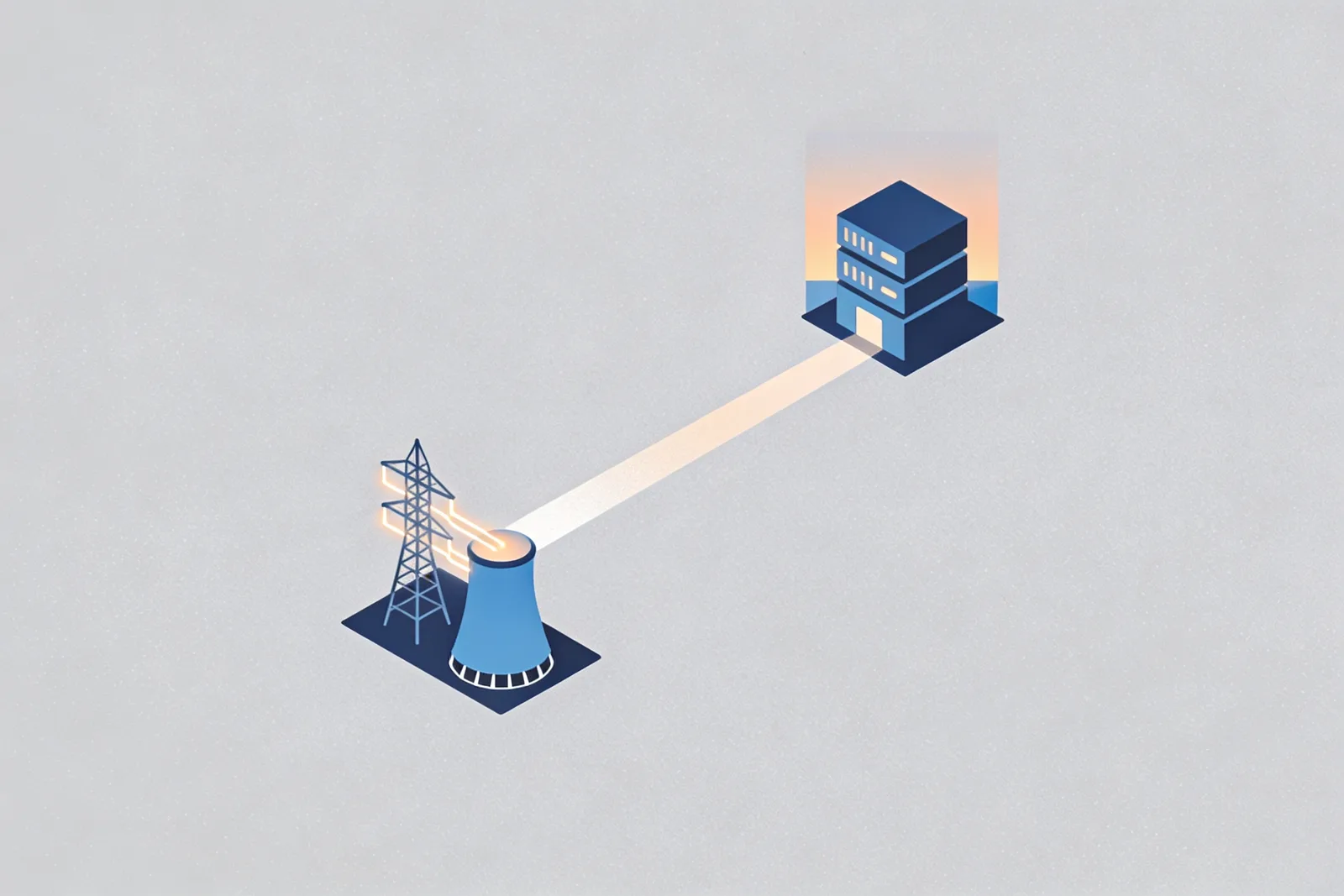
In 2022, dedicated AI data centers consumed roughly zero terawatt-hours of electricity. By 2026, the IEA forecasts 90 TWh for AI data centers alone, on top of 580 TWh for traditional data centers and 160 TWh for cryptocurrencies. Total demand could hit 1,050 TWh in 2026 depending on scenario — comparable to adding the annual electricity consumption of a mid-sized country.
Source: IEA; Statista estimates · 2022-2026
| Segment | Electricity demand (TWh) |
|---|---|
| 2022 — Traditional | 345 TWh |
| 2022 — Crypto | 110 TWh |
| 2022 — AI | 0 TWh |
| 2026 — Traditional | 580 TWh |
| 2026 — Crypto | 160 TWh |
| 2026 — AI | 90 TWh |
- AI data centers go from ~0 TWh (2022) to 90 TWh (2026)
- Traditional data center demand alone grows 68% in four years
- Total could hit 1,050 TWh — equivalent to a mid-sized country's grid
In 2022, dedicated AI data centers consumed roughly zero terawatt-hours of electricity. By 2026, the IEA forecasts 90 TWh for AI data centers alone, on top of 580 TWh for traditional data centers and 160 TWh for cryptocurrencies. Total data-center-plus-crypto electricity demand could hit 1,050 TWh in 2026 depending on the scenario. That's comparable to adding the annual electricity consumption of a mid-sized country.
Data center efficiency has plateaued
Global Data Center PUE 2007-2024: 2.5 to 1.56 (Plateaued Since 2018)
Global data center PUE improved from 2.5 in 2007 to 1.56 in 2024. But gains have plateaued since 2018 — the easy efficiency wins (hot-aisle containment, free cooling) are done. Further improvements will need liquid cooling and new rack designs built for high-density AI workloads.
Source: Uptime Institute · 2007-2024
| Year | PUE (lower is better) |
|---|---|
| 2007 | 2.5 |
| 2011 | 1.98 |
| 2013 | 1.65 |
| 2018 | 1.58 |
| 2019 | 1.67 |
| 2020 | 1.59 |
| 2021 | 1.57 |
| 2022 | 1.55 |
| 2023 | 1.58 |
| 2024 | 1.56 |
- PUE improved from 2.5 (2007) to 1.56 (2024) — a 37.6% reduction
- Gains have plateaued since 2018 — efficiency curve flattening
- Next gains require liquid cooling for AI-class rack density
Power usage effectiveness (PUE), the ratio of total facility power to IT equipment power, improved from 2.5 in 2007 to 1.56 in 2024. But gains have plateaued since 2018. The easy wins (hot-aisle containment, free cooling) are done. Further improvements will need liquid cooling and new rack designs built for high-density AI workloads.
Virginia: the unofficial AI capital of the U.S.
U.S. Data Center Electricity Share by State 2023: Virginia 25.6%
Virginia data centers consumed 25.6 percent of the state's total electricity in 2023, followed by North Dakota (15.4 percent), Nebraska (11.7 percent), and Iowa and Oregon (11.4 percent each). About 70 percent of global internet traffic flows through Virginia's data centers. Texas (4.6 percent) and California (3.7 percent) lag despite their economic weight — grid capacity, not demand, is the bottleneck in larger states.
Source: EPRI · 2023
| State | Share of state electricity from data centers |
|---|---|
| Virginia | 25.6% |
| North Dakota | 15.4% |
| Nebraska | 11.7% |
| Iowa | 11.4% |
| Oregon | 11.4% |
| Wyoming | 11.3% |
| Nevada | 8.7% |
| Utah | 7.7% |
| Arizona | 7.4% |
| Washington | 5.7% |
| Illinois | 5.5% |
| New Jersey | 5.4% |
| Texas | 4.6% |
| Georgia | 4.3% |
| California | 3.7% |
- Virginia leads at 25.6% — roughly 70% of global internet traffic flows through its data centers
- Six states over 11% share — the data-center-dependent grids
- Texas (4.6%) and California (3.7%) lag despite economy size because of grid capacity limits
Virginia data centers consumed 25.6% of the state's total electricity in 2023, followed by North Dakota (15.4%), Nebraska (11.7%), and Iowa (11.4%). About 70% of global internet traffic flows through Virginia's data centers. The state's grid is now the single largest power sink in the U.S. information economy. Texas (4.6%) and California (3.7%) lag despite their economic weight, and the reason is simple: grid capacity, not demand, is the bottleneck.
Ireland: a national-grid case study
Ireland Data Center Electricity Share 2015-2023: 5% to 21% (4.2x Growth)
Ireland is the world's most data-center-dependent national grid. Data centers consumed 21 percent of Ireland's national electricity in 2023, up from 5 percent in 2015 — a 4.2x increase in eight years. The growth came from an attractive tax environment and strong digital infrastructure, and it has triggered national debates about whether data center siting moratoriums are necessary.
Source: Central Statistics Office Ireland · 2015-2023
| Year | Share of national electricity from data centers |
|---|---|
| 2015 | 5% |
| 2016 | 6% |
| 2017 | 7% |
| 2018 | 8% |
| 2019 | 9% |
| 2020 | 11% |
| 2021 | 14% |
| 2022 | 18% |
| 2023 | 21% |
- Ireland's data-center share grew from 5% to 21% in eight years
- 4.2x increase — the fastest national-grid shift globally
- Triggered national debates on siting moratoriums
Ireland is the world's most data-center-dependent national grid. Data centers consumed 21% of total national electricity in 2023, up from 5% in 2015. That's a 4.2x increase in eight years. The growth came from an attractive tax environment and strong digital infrastructure, and it's triggered national debates about whether data center siting moratoriums are necessary.
SMRs: the nuclear answer
Small Modular Reactor (SMR) Facilities by Country 2026: U.S. Leads With 45
As of 2026, only two small modular reactors (SMRs) are operational globally. But 127 more are planned or under construction across nine advanced economies. The United States leads with 45 facilities (44 planned, 1 under construction), followed by Russia with 18, France with 12, and China and Japan with 10 each. AI-driven electricity demand is reviving nuclear investment at a pace not seen since the 1970s.
Source: World Nuclear Association · 2026
| Country | SMR facilities (planned + under construction + operational) |
|---|---|
| United States | 45 |
| Russia | 18 |
| France | 12 |
| China | 12 |
| Japan | 10 |
| Canada | 6 |
| South Korea | 6 |
| United Kingdom | 6 |
| South Africa | 4 |
| Czech Republic | 3 |
| Denmark | 2 |
| India | 2 |
| Netherlands | 3 |
- United States leads with 45 SMR facilities in the pipeline
- Only 2 reactors operational worldwide vs 127 planned or under construction
- Nine advanced economies with 6+ facilities — the broadest nuclear pipeline since the 1970s
As of 2026, only two small modular reactors (SMRs) are operational globally. But 127 more are planned or under construction. The United States leads with 45 facilities (44 planned, 1 under construction), followed by Russia with 18, France with 12, and China and Japan with 10 each. AI-driven electricity demand is reviving nuclear investment across nine advanced economies. Five years ago, that wasn't on anyone's roadmap. See the source data on Statista.
Methodology and data sources
This post combines two data layers, intentionally interleaved. The spine is TechnologyChecker's own detection index — live technology fingerprints across the live business domains we crawl each month, used to ground-truth the macro forecasts against the install base that already runs the public web. That detection lens drives §2 in full and appears as a "TC reality check" callout inside §3 and §4 wherever the install base contradicts (or extends) the forecast. The supporting frame is Statista's Tech Trends 2025 dossier (Digital & Trends report, study ID 188170, published late 2025 / early 2026) — a 39-chart synthesis of third-party research that powers §1 and §3–§8.
Primary data sources via Statista:
- Gartner — IT spending, enterprise software, software buyer priorities, AI PCs, GenAI devices
- IDC — GenAI smartphone shipments
- Counterpoint Research — GenAI smartphone share of total shipments
- Stack Overflow Developer Survey 2024 — AI tool usage, developer challenges, complex task ability
- DevSkiller — AI engineer skill proficiency (15,337 respondents)
- Aberdeen Group / Spiceworks / SWZD — IT budget allocation, tech trend adoption (835 IT pros)
- ISC2 — emerging cybersecurity tech, GenAI capabilities and concerns (15,852 pros)
- CompTIA — cybersecurity action drivers (1,170 respondents, Q3 2024)
- Accenture / World Economic Forum — GenAI cybersecurity threat perception (321 leaders)
- TrendForce / DRAMeXchange / IHS / TrendFocus — DRAM, NAND, HBM market data
- World Semiconductor Trade Statistics — memory semiconductor revenue
- IEA / de Vries / Central Statistics Office Ireland / Danish Energy Agency — data center electricity
- EPRI — U.S. data center electricity share by state
- Uptime Institute — global PUE (526 data center operators)
- World Nuclear Association — SMR facility counts
- Statista Market Insights — AI market size, AI chip market, IT services market
Primary data source — TechnologyChecker.io (Q2 2026):
- TechnologyChecker — live technology detection across 29.9 million live business domains. Our index fingerprints 40,000+ technologies on the public web and refreshes detection counts monthly. Figures in §2 carry the crawl month they were measured in; the May 2026 and August 2026 readings sit on different coverage and are not compared. Market-share percentages are computed as a technology's detected-domain count divided by the total domains on which any technology in the same category was detected. All charts in the "What TechnologyChecker's detection data shows" section (top-10 most-detected technologies, category leader market share) are drawn from this index. Cross-references to underlying analyses appear in most popular technologies by category, technology lookup industry statistics, and AI adoption trends Q1 2026.
Each Statista-derived statistic includes a direct link to its source chart in the sections above. For readers who want the full dossier, it's available through Statista's Digital & Trends library under study ID 188170. For readers who want the raw detection signal, every technology mentioned has its own profile under /technology/{slug} with current market share, top customers, and month-over-month adoption trend.
Key Takeaways
Eight observations stand out — one from the install base, seven from the dossier — and they only make sense read together.
The install-base finding comes first because it reframes everything else. ChatGPT is live on 0.18% of the public web (TC, May 2026) even though 82% of developers use it daily. That ~450× gap between creation and deployment is the speed limit on every AI forecast below — and the reason five-vendor concentration in error tracking, frameworks, CMS, and ecommerce (all above 50% leader share in our index) means AI features ship inside incumbents more often than they displace them.
The clearest leading indicator on the macro side is data center spending. 48.8% growth in 2025 is the largest single-year jump in the segment's history, and it tends to lead enterprise AI adoption by six to twelve months. Agentic AI is the next wave, and it's moving faster than mobile did. The 1% → 33% shift in enterprise software by 2028 is a steeper curve than smartphones rode from 2007 to 2012 — but it will land first in the productivity layer (CRM, marketing automation), where no vendor has a moat to defend.
The developer story is bimodal. 82% of developers write code with AI, but only 13% use it to commit and review. Trust and codebase context (not model capability) are the real barrier — and our 0.18% widget-detection number is the downstream evidence. On the device side, consumer AI hardware has quietly become mandatory. Most new PCs will be AI-capable by 2026 and most smartphones by 2029. The refresh cycle is compulsory because the processors changed.
Memory is where the money concentrates. HBM captures 30% of DRAM revenue on 10% of output, which means every AI training dollar funnels through three suppliers. In cybersecurity, GenAI shows up as both attacker and defender: 47% of security investment cites GenAI as the driver, and 47% of leaders call GenAI-adversarial capabilities their top concern. And the last link in the chain is the grid itself. 1,050 TWh of data-center demand in 2026 is the reason SMR nuclear pipelines, which weren't on anyone's roadmap five years ago, are now the biggest since the 1970s.
Technology trends for 2025-2026 aren't a list of tools. They're a chain of dependencies. AI demand drives data center construction. That drives memory demand, which drives semiconductor capex, which drives power demand, which drives nuclear investment. Each link is a multi-billion-dollar market on its own, and together they change how the global technology industry allocates capital for the rest of the decade. Where the chain meets the install base — that's where 2026 actually plays out.
Frequently Asked Questions
What is the biggest technology trend for 2025-2026? The single most consequential technology trend is the gap between AI forecast and AI install base. Data center spending grew 48.8% in 2025 (Gartner) and the AI market is forecast at $1.675T by 2031, yet ChatGPT is detected on just 0.18% of the public web in our 29.6M-domain index (TC, May 2026) and 66.1% of developers say they don't trust AI output (Stack Overflow). The trend that drives every other trend on this list — memory demand, semiconductor capex, data center power, nuclear investment — is the speed at which that production-deployment gap closes.
How big will the AI market be in 2031? Statista Market Insights forecasts the global AI market will reach $1.675 trillion in 2031, up from $254.5 billion in 2025 — a 382.65% increase. The forecast adds $1.3 trillion of new market value between 2026 and 2031, spread across foundation models, AI-embedded enterprise software, AI chips, AI-capable consumer devices, and AI-specific infrastructure services.
What percentage of smartphones will be AI-capable by 2029? Counterpoint Research forecasts that 57% of all smartphone shipments in 2029 will be GenAI-capable — up from 30% in 2025. IDC's unit forecast aligns: 912 million GenAI smartphone shipments in 2028, up from 51 million in 2023. The majority-AI crossover happens between 2027 and 2028.
Why is data center electricity demand rising so fast? Data-center and cryptocurrency electricity demand is forecast to hit between 620 and 1,050 TWh worldwide in 2026, up from roughly 455 TWh in 2022 (IEA). AI data centers alone contribute 90 TWh by 2026 — compared to effectively zero in 2022. The US state with the highest data center share of electricity is Virginia at 25.6%; Ireland leads at the country level at 21% of national consumption.
How many small modular reactors (SMRs) are being built? As of 2026, only 2 small modular reactors are operational globally, but 127 more are planned or under construction across nine advanced economies (World Nuclear Association). The United States leads with 45 facilities in the pipeline, followed by Russia with 18, France with 12, and China and Japan each with 10.

Data Analyst
5+ years of experience
Emma is a Data Analyst at TechnologyChecker, where she analyses technology adoption data to build better prospect lists and uncover actionable patterns for sales teams.
- BSc Data Science, Cardiff University
- Google Data Analytics Professional Certificate
- Tableau Desktop Certified Associate
Never miss our research